Simple Fitness Activities for Parents and Kids
Most parents know that feeling: the kids are bouncing off the walls, and there’s a little window of free time before dinner. What if that window became the best part of your day? Moving together as a family doesn’t have to mean a formal workout — it can mean laughing on the living room floor, chasing each other around the yard, or dancing like nobody’s watching.
When fitness feels like play, kids stop counting the minutes and start asking for more. And there’s a quiet bonus for you too: regular active time together builds a habit your children will carry into adulthood, keeps your own energy up, and gives everyone a shared reason to put the screens down for a while.
Below you’ll find simple fitness activities for parents and kids that need almost no equipment and zero experience. They work in a small apartment, a backyard, or a neighborhood park, and each one includes ideas for different ages plus safety tips so everyone stays happy and injury-free.
Key Takeaways
- Family fitness works best when it feels like play, not a workout — think games, challenges, and silly races.
- Most of these activities need no equipment at all: a timer, a ball, and some floor space cover almost everything.
- Short 10–20 minute sessions are perfect for young kids; build up gradually as they (and you) get fitter.
- Always match activities to your child’s age and energy level — toddlers thrive on short bursts, tweens love challenges.
- Warm up gently, keep water nearby, and end with calm stretching so bodies cool down and nobody crashes.
- The real goal isn’t perfect form or high scores — it’s laughing, moving, and spending time together.
Morning Wiggles: A 10-Minute Wake-Up Routine
A short burst of movement before the day starts changes the whole mood. Do it in the living room or on the lawn; no equipment needed.
- March in place (2 minutes). Everyone marches around the room with high knees and swinging arms. Toddlers can simply stomp around; tweens can add speed and see who keeps the rhythm longest.
- Animal walks (3 minutes). Pick an animal and move like it for 30 seconds each: bear crawl, frog jumps, crab walk, and a slow snake slither on the floor. Let the kids pick the animals — their choices get sillier every time.
- Star-jump challenge (2 minutes). Set a timer and count how many star jumps the family can do together. For toddlers, jumping in place counts. For tweens, make it a competition: who can do the most in 30 seconds?
- Balloon-style cool-down (3 minutes). No balloon needed — everyone stretches arms up high, then slowly “deflates” by bending forward and wiggling down to the floor. Finish with slow shoulder rolls and three big deep breaths together.
Safety note: Move furniture with sharp edges aside first, and make sure floors aren’t slippery. If anyone feels dizzy, stop and sip water — there’s no shame in a pause.
Backyard Adventure Games
Fresh air makes everything more fun. These games turn a small yard or a park corner into an adventure course, and they’re endlessly adjustable for different ages.
- The obstacle trail. Lay out 5–6 “stations” using things you already own: a towel to jump over, cushions to weave between, a line of shoes to hop across, a wall to touch and run back from. Each person runs the course twice. For toddlers, keep stations simple; for tweens, time each run and chase personal bests.
- Chase and freeze tag. One parent is “it” and tries to tag everyone; tagged players freeze until another player unfreezes them with a high-five. Round two: the kids take turns being “it.”
- Shadow stepping. On a sunny day, each person tries to step on the other players’ shadows while protecting their own. The dodging and darting give everyone a genuine workout — and it’s hilarious.
- Follow-the-leader circuit. The leader picks a movement — gallop, skip, side-shuffle, walk like a penguin — and everyone follows in a line across the yard. After each lap, a new leader is chosen. Tweens love making the movements harder; toddlers love copying the leader exactly.
Safety note: Check the ground for sticks and slippery spots before starting. Keep toddlers within arm’s reach during tag games, and pick a shaded spot on hot days.
Indoor Rainy-Day Games
Bad weather is not an excuse — it’s an opportunity. These indoor games keep the whole family moving.
- Statue dance party. Play music and dance; when the music pauses, everyone freezes like a statue. Whoever moves does five funny squats. Kids never seem to get tired of this one.
- Laundry-basket toss relay. Roll up pairs of socks into balls and take turns tossing them into a laundry basket from increasing distances. Count successful throws. It’s secretly a throwing and core workout, but it feels like a carnival game.
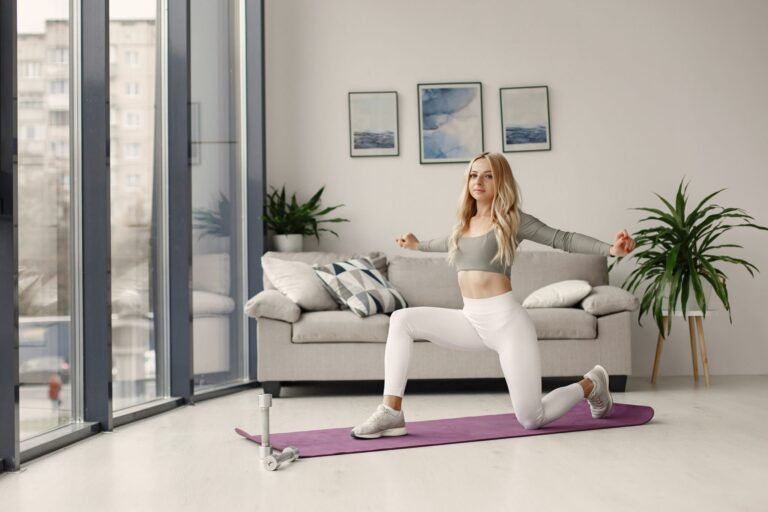
- Floor-is-lava lunges. Scatter cushions and mats across the floor; everyone must travel from one side of the room to the other by stepping only on the “safe islands.” Lunging, stretching, and balancing are all built in. For tweens, make the islands smaller and the distance longer.
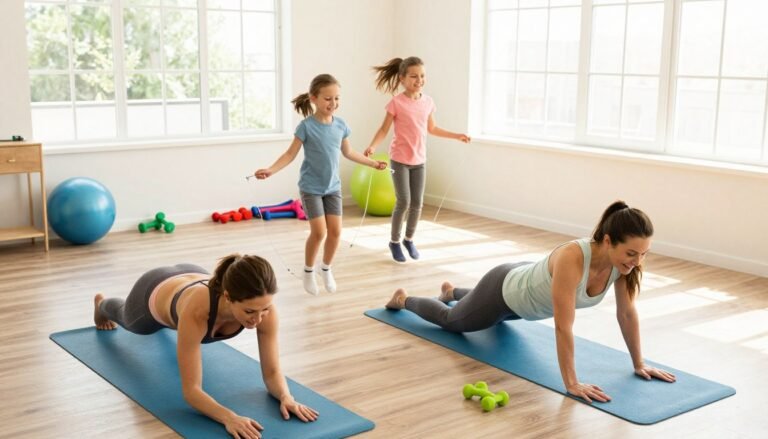
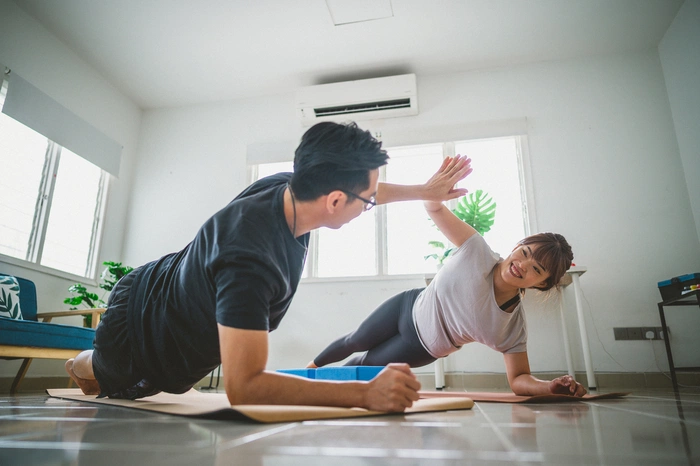
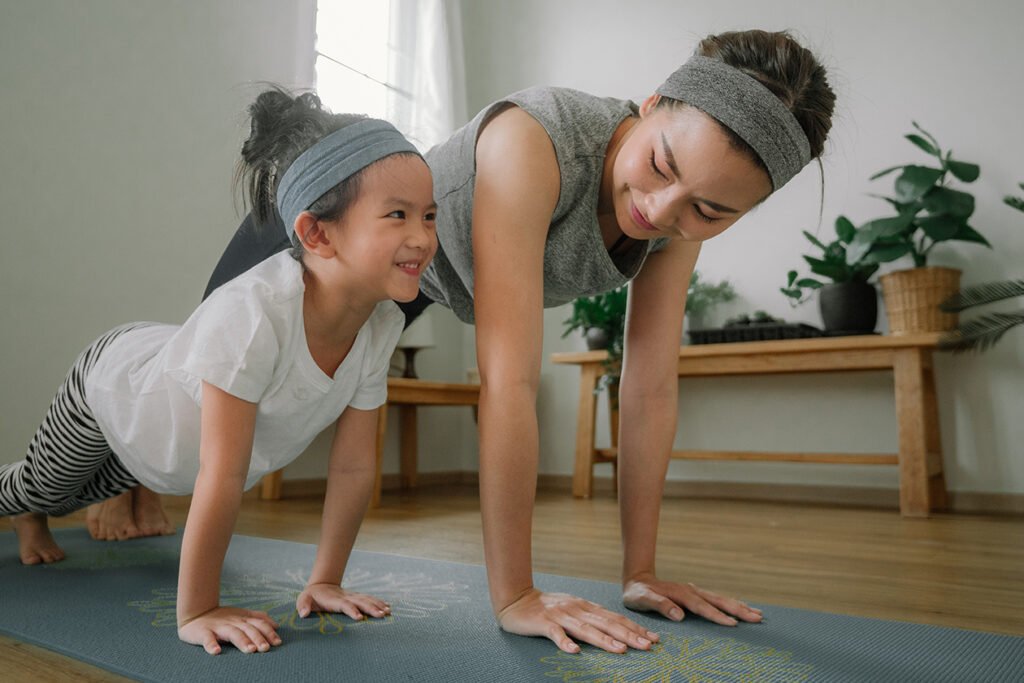
- Plank story time. Everyone holds a plank (or a knee plank for beginners and little kids) while one person reads or tells a short funny story. Try to hold the plank until the story ends. Stories usually last 60–90 seconds — just right.
Safety note: Clear breakable items from the play area, use a rug or mat for floor moves, and land softly on the balls of the feet with bent knees.
Walks, Bikes, and Weekend Mini-Adventures
Not every family activity has to be a game. Sometimes the simplest fitness activities for parents and kids are the ones that just happen on the way somewhere.
- The walking scavenger hunt. Before a walk, make a short list of things to spot: a red door, a bird, something round, a tree taller than the house. Kids who normally groan at “going for a walk” suddenly want to keep going to find the next item.
- Interval bike rides. Ride together at a relaxed pace, then call out “go!” for 30 seconds of faster pedaling, then slow down again. Repeat five or six times. Younger kids on balance bikes or training wheels can do short “go!” bursts too — just keep the route flat and traffic-free.
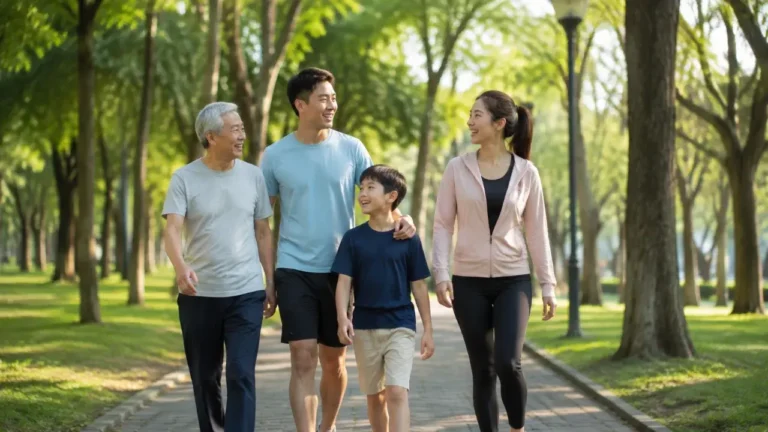
- The talking walk. Pick a route and agree that the phone stays in a pocket the whole time. Walk and talk — about school, dreams, funny memories. It counts as fitness, but it doubles as quality time, which matters just as much.
- Park bench circuit. At a park, use a bench for step-ups (10 each leg), incline push-ups (10), and tricep dips (10). Kids can join with step-ups and wall push-ups on the bench back. Rest one minute, repeat twice.
Safety note: Helmets for all bike riders, every time. On walks, choose paths with sidewalks, and make sure little kids hold a hand near roads.
Matching Activities to Ages: A Quick Comparison
Not every activity fits every age. Use this table to pick games that match your kids’ stage — and your own energy level on a given day.
| Age Group | Best-Fit Activities | Energy Level | Typical Attention Span |
|---|---|---|---|
| Toddlers (1–3) | Animal walks, simple chasing, dancing, stepping games | Short bursts | 5–10 minutes |
| Preschoolers (3–5) | Statue dance, follow-the-leader, obstacle trails, scavenger hunts | High but variable | 10–15 minutes |
| School-age kids (6–9) | Tag games, relays, obstacle courses, plank story time | High and sustained | 15–25 minutes |
| Tweens (10–12) | Timed challenges, bike intervals, park bench circuits, step-up goals | High, likes competition | 20–30 minutes |
| Parents | Everything above — plus evening stretching and walking | Varies by day | As long as the kids allow |
Building a Family Fitness Habit
One fun afternoon is lovely; a weekly habit is life-changing. You don’t need a rigid schedule — just a little structure.
- Pick two or three regular slots. A 15-minute morning routine twice a week plus one weekend adventure is plenty. Put them on the fridge calendar so they feel official.
- Let the kids choose sometimes. Alternate who picks the day’s activity. Kids who choose the game show up with twice the enthusiasm.
- Track it visibly. A simple sticker chart on the fridge works wonders for younger kids. Tweens might prefer a shared notebook of personal bests.
- Celebrate consistency, not performance. Praise showing up — “Three sessions this week, well done!” The habit is the prize; the fitness follows naturally.
- Grow it slowly. After a month of comfortable sessions, add five minutes or one new game. Small, steady increases keep it sustainable.
Frequently Asked Questions
How often should our family do these activities?
Aim for three to five active sessions per week, but don’t stress about the number. Even two 15-minute sessions a week is a real win for a family just starting out. Consistency matters far more than duration.
What if my kids refuse to join in?
Don’t push — invite. Start moving yourself and make it look fun; curiosity usually does the rest. Let them pick the game, invite a friend, or choose the music for a dance session. If a child is genuinely tired or upset, skip it — forcing it kills the fun for next time.
Do we need any special equipment?
No. Every activity here uses things you already have: cushions, towels, a laundry basket, rolled-up socks, a park bench. If you want to expand later, a simple ball and a jump rope unlock dozens more games, but they’re not required to start.
How do I keep it safe with kids of very different ages?
Set the rules around the youngest child: slower paces, lower jumps, simpler courses. Give older kids “bonus challenges” (extra laps, timed runs) so they stay engaged without making things too rough for little ones. Always have one adult actively supervising mixed-age games.
Is it okay for beginners and unfit parents to join in?
Absolutely — that’s the whole point. These activities let everyone participate at their own level: march instead of jog, do knee planks instead of full planks, walk the obstacle course instead of sprinting it. Move at a pace that lets you hold a conversation, drink water when you need it, and skip anything that causes pain.
A Habit You’ll All Look Forward To
Here’s the secret nobody tells you: the fitness is almost a side effect. The real prize of these fitness activities for parents and kids is the inside jokes you’ll build — the penguin walk that never got old, the frozen statue your five-year-old held for a full minute.
Start this week, not next. Pick one activity from this article, gather the family, and give it ten minutes. Chances are, nobody will want to stop at ten.