Easy Workout Plans for Busy Parents
You promised yourself you’d exercise today. Then the toddler spilled breakfast on the floor, school pickup ran late, and by bedtime you were asleep before the kids were. If this sounds familiar, you’re not failing at fitness — you’re just living the reality of parenting, where free time is measured in stolen minutes.
Here’s the good news: you don’t need an hour at the gym to get stronger and feel better. Ten honest minutes of movement, three or four days a week, will do more for your energy, mood, and strength than the perfect one-hour routine you never start.
This guide gives you simple workout plans for busy parents that fit into real family life. No equipment, no commute, no fancy clothes required. Just you, a little floor space, and whatever sliver of time you can find.
Key Takeaways
- Short sessions count: 10 to 20 minutes of bodyweight exercise, done consistently, genuinely builds fitness.
- You can exercise while the kids are awake — treat them as part of the workout, not an obstacle.
- Morning, lunch break, or after bedtime are the three most reliable time windows for parents.
- A sturdy chair and two filled water bottles are all the equipment you need to start.
- Plan for interruptions: a flexible routine you can pause and resume beats a rigid one you abandon.
- Rest days matter as much as workout days, especially on broken sleep.
- Start with two or three sessions a week — consistency grows from success, not from ambition.

Before You Start: Setting Yourself Up to Win
The biggest mistake busy parents make isn’t choosing the wrong exercises — it’s setting a bar so high that one bad day kills the whole plan.
- Pick your two or three best days this week. Not seven. Just two or three. Mark them on a calendar or phone reminder where you’ll see them.
- Choose your time slot in advance. Morning before the kids wake up, lunch break, or after bedtime — the plans below are built around these windows. Decide tonight for tomorrow.
- Claim your space. A clear patch of living room floor about the size of a yoga mat is enough. Push the coffee table aside once, and you’re set.
- Wear whatever you can move in. Pajamas, a t-shirt and shorts, anything comfortable. No changing into special gear required.
- Agree with yourself that interruptions are fine. Kids climb on you during squats? Pause, handle it, resume. The session still counts.
The 10-Minute Energy Booster
This is your minimum viable workout. It’s designed for the days when everything went sideways but you still want to move your body. Do each exercise for 40 seconds, rest for 20 seconds, and move to the next one. One round takes exactly 10 minutes.
- March in place. Lift your knees to hip height and pump your arms. This warms up your whole body and tells your brain we’re exercising now.
- Bodyweight squats. Stand with feet shoulder-width apart, sit your hips back like you’re sitting in an invisible chair, and stand back up. Keep your chest lifted.
- Wall push-ups. Hands on a wall at shoulder height, body straight, bend your elbows and press back. If the wall feels easy, use a sturdy table or counter instead.
- Standing knee lifts. Alternate lifting each knee while reaching the opposite elbow toward it. Keep a brisk pace — this is your cardio burst.
- Chair-assisted tricep dips. Sit on the edge of a sturdy chair, hands gripping the seat beside you, slide forward, bend your elbows behind you, then press up.
- March with a twist. March again as in exercise one, but add a gentle torso twist with each step to finish strong.
On genuinely hard days, just doing the first three exercises (six minutes) still counts. Give yourself credit for showing up.
The 20-Minute Full-Body Session
This is the workhorse of these workout plans for busy parents. It hits legs, arms, core, and cardio in one efficient circuit. Do each exercise for 45 seconds with 15 seconds of rest between them, complete all nine, then rest for one minute and repeat the whole circuit once more.
- Squats. Same as the 10-minute version, but try to go a little deeper as your legs get stronger.
- Incline push-ups. Hands on a sturdy chair, body in a straight line from head to heels, lower your chest and press back up.
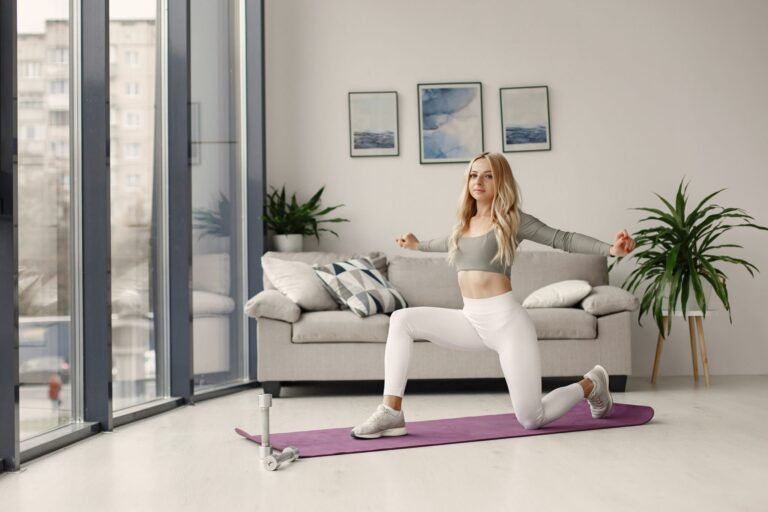
- Reverse lunges. Step one foot back, bend both knees until the back knee nearly touches the floor, then return to standing. Alternate legs.
- Water-bottle rows. Hinge forward slightly with a filled water bottle in each hand, pull them up toward your ribs, and lower slowly.
- Glute bridges. Lie on your back with knees bent and feet flat, lift your hips until your body forms a straight line from shoulders to knees, squeeze, and lower.
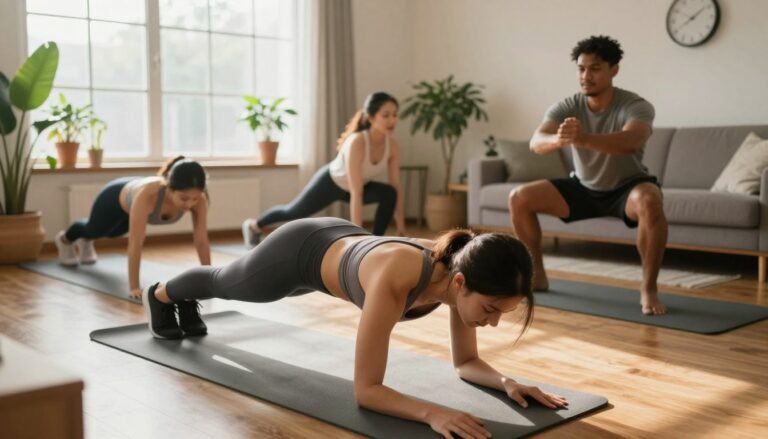
- Mountain climbers. From a plank (or with hands on a chair), drive your knees toward your chest alternately at a quick pace.
- Dead bug. On your back, arms pointing up and knees bent at 90 degrees. Slowly lower your right arm and left leg toward the floor, return, and switch sides. Keep your back flat.
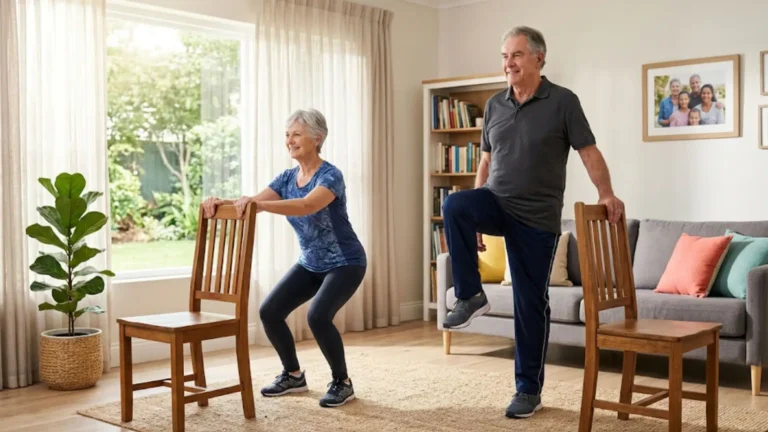
- Standing side leg raises. Hold the chair for balance, lift one leg out to the side, and lower slowly. Spend half the time on each leg.
- Jog in place. Finish with 45 seconds of cardio — jog in place or lift your knees high if you have the energy.
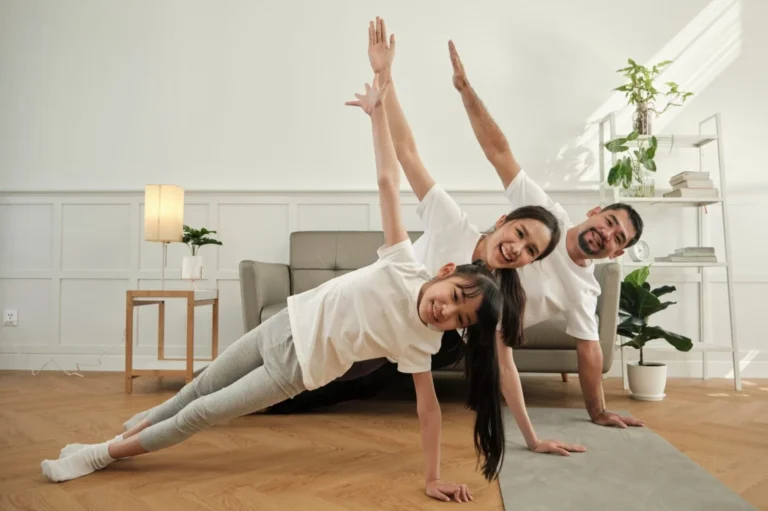
If the kids are awake, invite them in — children love copying squats and mountain climbers.
Finding Your Time Window: A Comparison
Here’s how the three most reliable parent time slots compare, so you can pick the one that fits your life — or mix them across the week.
| Time Slot | Best For | Suggested Plan | Watch Out For |
|---|---|---|---|
| Morning (before kids wake up) | Parents whose evenings collapse into chores | 10-minute energy booster | Set clothes out the night before so you don’t talk yourself out of it |
| Lunch break | Parents working from home or with flexible schedules | 20-minute full-body session | Keep a change of top nearby; workout in work-friendly layers |
| After bedtime | Parents whose kids sleep reliably at a set time | 20-minute full-body session or 30-minute extended plan | Don’t start past your own exhaustion point — swap to the 10-minute plan if you’re wiped |
The 30-Minute Weekend (or Naptime) Builder
When you get a rare longer window — a nap that holds, a partner taking the kids out, a lazy Saturday — use this session to build real strength. It’s the 20-minute circuit plus a focused strength round.
- Warm up for 3 minutes. March in place, arm circles, gentle side bends, and bodyweight squats to loosen everything up.
- Do one full 20-minute circuit exactly as described above.
- Rest for 2 minutes, then do a strength finisher: 3 slow rounds of 10 squats, 8 incline push-ups, and 10 glute bridges. Take 30 seconds of rest between rounds.
- Cool down for 5 minutes. Slow walk in place, stretch your quads, hamstrings, chest, and shoulders. Breathe slowly.
Make It a Family Affair
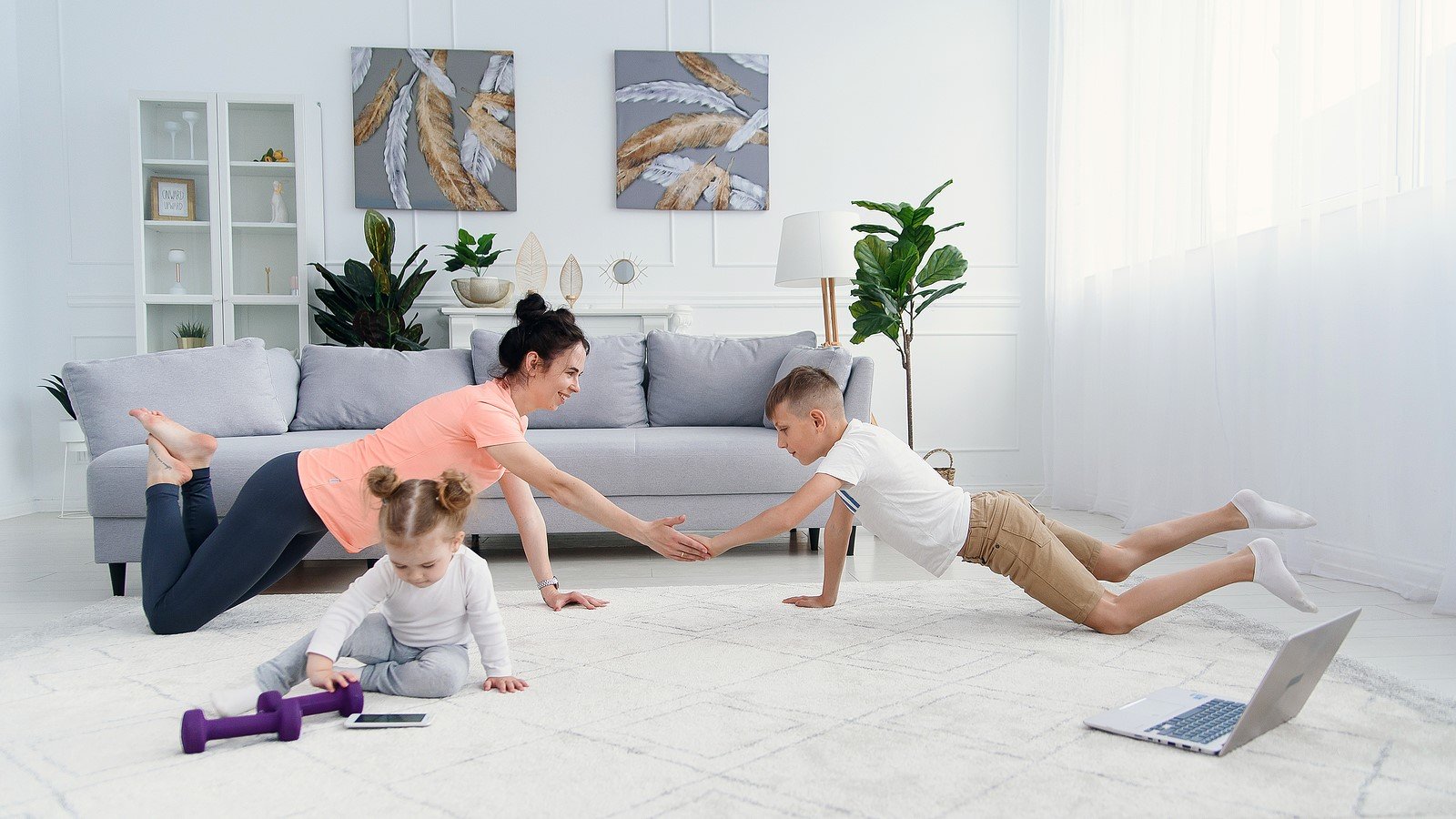
Sometimes the workout doesn’t happen around the kids — it happens with them. These ideas turn active time together into genuine exercise for you and fun for them.
- Dance party. Ten minutes of fast dancing with the kids is real cardio. Let them pick the songs — commitment goes up when they’re the DJ.
- Animal walks. Bear crawls, crab walks, and frog jumps across the living room. Kids think it’s a game; your shoulders, legs, and core know the truth.
- Stroller power walks. A brisk 20-minute stroller walk counts as a workout — throw in a few squats at each stop.
- Playground circuit. While the kids play, do bench step-ups, push-ups against a low wall, and standing lunges. You’re supervising and exercising at the same time.
- Carry workout. Carrying a toddler up stairs or holding them during squats (keep your back straight) is genuine functional strength training.
Staying Consistent When Life Is Chaos
Motivation fades; systems survive. Here’s how real parents keep these workout plans for busy parents going past week two.
- Anchor it to something you already do. Work out right after the kids’ bedtime routine, or right before your morning coffee. Linked habits stick better than floating ones.
- Track with tally marks on the fridge. One mark per session. Watching the row grow is surprisingly motivating.
- Have a backup plan for every session. Can’t do 20 minutes? The 10-minute booster is always there. Can’t do 10? Five minutes of squats still beats zero.
- Forgive missed days instantly. One skipped week doesn’t erase the weeks you did. The only failed plan is the one you quit.
- Revisit your plan monthly. As kids’ schedules change, your time windows will too. Pick new days and slots without guilt when life shifts.

Frequently Asked Questions
Is 10 minutes of exercise really enough to make a difference?
Yes — if you do it regularly. Short sessions build cardiovascular fitness, strength, and habit momentum. Consistency matters more than duration for beginners: three 10-minute sessions a week will change how you feel within a month.
What if my baby or toddler won’t let me exercise?
Include them. Babies can lie on a mat next to you during glute bridges, and toddlers love imitating squats and bear crawls. If even that fails, exercise in two-minute bursts throughout the day — a set of squats here, wall push-ups there. It all adds up.
Do I need to buy any equipment?
No. Everything in these plans uses bodyweight, a sturdy chair, and filled water bottles. Nothing here requires a purchase.
Should I exercise if I’m exhausted from a bad night’s sleep?
Listen to your body. Gentle movement often leaves tired parents feeling better than staying on the couch. But if you’re truly wiped, skip the session and sleep — rest is part of fitness, not the opposite of it.
How quickly will I see results?
Expect more energy and less stiffness within two to three weeks of consistent sessions; visible strength changes usually take six to eight weeks. For a busy parent, keeping up with the kids without getting winded is a real, meaningful win.
You’ve Got This
You don’t need to become a different person to get fit — you just need a plan that respects the life you already have. Start with the 10-minute booster on your two best days this week, and add the 20-minute session when that feels normal. Let the kids join in, laugh through the interruptions, and stop chasing perfect.
Your kids don’t need a parent who exercises perfectly. They need a parent who feels good enough to play — and these little pockets of movement give you exactly that.