
Beginner Strength Training: A Simple Guide to Getting Started
Walking into strength training for the first time can feel a little intimidating. You picture heavy weights, crowded gyms, and people who seem to know exactly what they’re doing. But here’s the truth: almost everyone in that room started exactly where you are right now.
You do belong. Strength training isn’t about lifting the heaviest weight or mastering complicated exercises on day one. It’s about learning to move well, building a little confidence each session, and giving your body something it will thank you for in the long run. Stronger muscles, stronger bones, better balance, and more energy for everyday life — those are the real prizes.
In this guide, we’ll walk through everything you need to get started: what strength training actually is, what equipment (if any) you need, how to structure your first weeks, and the simple habits that keep you progressing safely. No experience required.
Key Takeaways
- Strength training simply means making your muscles work against resistance — your body weight counts.
- You can start with zero equipment; bodyweight exercises are enough for the first several weeks.
- Two to three short sessions per week are ideal for beginners — consistency beats intensity.
- Learning good form matters far more than lifting heavy in the beginning.
- Rest days are part of the program; your muscles grow stronger while you recover.
- Aim to progress gradually by adding reps, sets, or a small amount of resistance over time.
What Is Strength Training, Really?
At its core, strength training is any exercise that makes your muscles work against some form of resistance — a dumbbell, a resistance band, or simply your own body. When you push, pull, or hold against that resistance, your body repairs the effort afterward and comes back a little stronger. Repeat this cycle for weeks and months, and you get real, noticeable change.
It’s worth clearing up a common worry right away: strength training will not suddenly make you “too bulky.” Building large amounts of muscle takes years of very deliberate effort. What you’ll get as a beginner is much more practical — carrying groceries feels easier, stairs get friendlier, your posture improves, and everyday tasks stop wearing you out.
What You Need to Start (Spoiler: Not Much)
One of the best things about strength training for beginners is how little you need to begin. Here’s how to think about it, step by step.
Step 1: Start with your own body
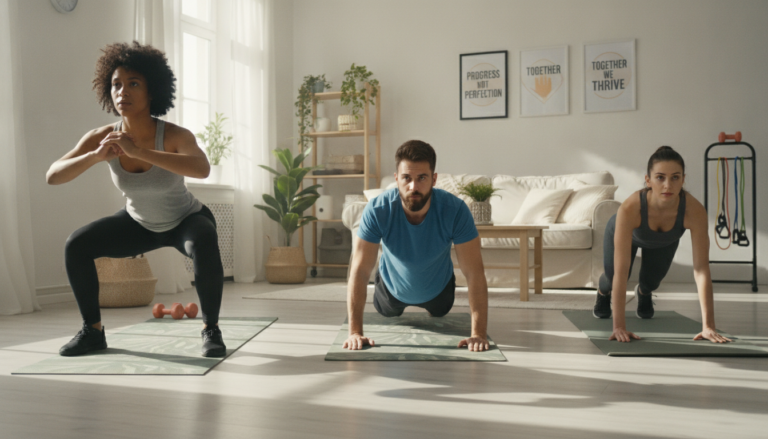
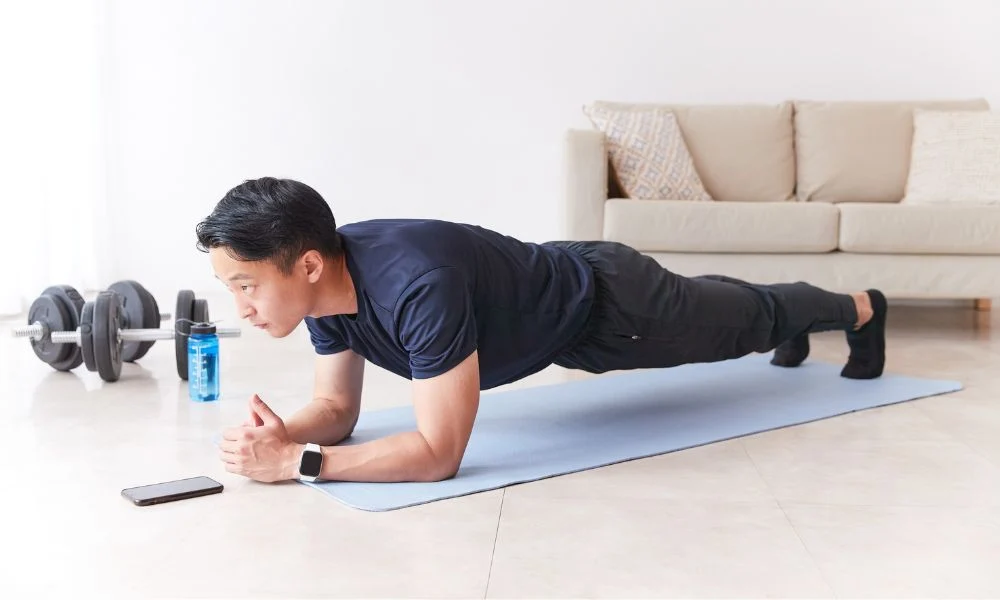
Your body is the most underrated piece of fitness equipment you own. Exercises like squats, wall push-ups, glute bridges, and planks can challenge your muscles seriously when you’re new. They’re also the safest way to learn movement patterns before you add any weight. Give yourself at least two to four weeks of bodyweight work — it’s not a detour, it’s the foundation.
Step 2: Add simple tools when you’re ready
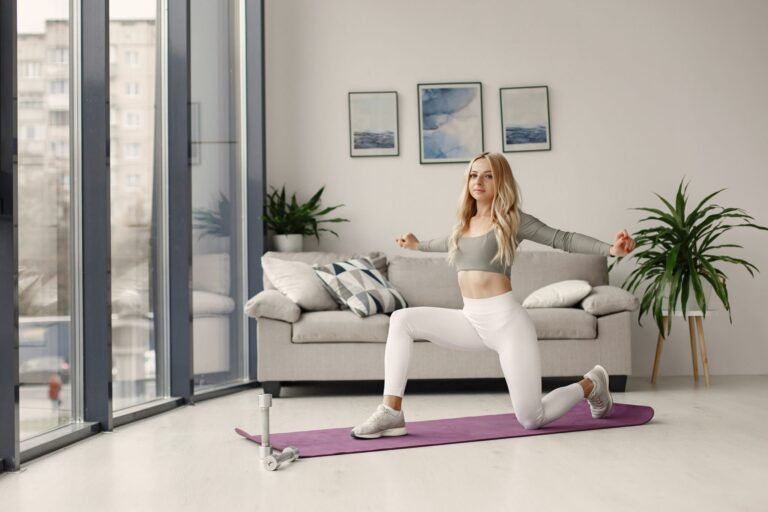
Once bodyweight exercises start feeling manageable, a few inexpensive items open up new options. A pair of light dumbbells covers pressing, rowing, and curling movements. A resistance band is lightweight, cheap, and great for travel or small spaces. A sturdy chair works perfectly for step-ups, tricep dips, and incline push-ups.
Step 3: Make your space work
You don’t need a home gym — a clear patch of floor about the size of a yoga mat is enough. Keep your equipment somewhere visible. Out of sight often means out of mind, and a dumbbell sitting in the corner is a quiet daily reminder.
Not sure which approach suits you? Here’s a quick comparison of the three most common ways beginners train.
| Style | Cost | Space needed | Best for | Watch out for |
|---|---|---|---|---|
| Bodyweight training | Free | A small clear floor area | Learning form safely and building a base | Some moves get easy quickly; you’ll need harder variations to keep progressing |
| Light dumbbells | Low — one pair is enough to start | Same small area plus a corner for storage | Gradually increasing resistance and training upper and lower body | Choosing weights that are too heavy too soon; start light and build up |
| Resistance bands | Very low | Almost none — bands fit in a drawer | Travel, joint-friendly training, and adding resistance anywhere | Check bands for tears and anchor them securely |
Your First Workout: A Simple Full-Body Session
You don’t need a complicated split routine or a dozen exercises. A single full-body session that hits all your major muscle groups is the perfect beginner workout. Follow these steps.
- Warm up for five minutes. March in place, do some arm circles, and add a few gentle leg swings. Warm muscles move better and are less likely to feel sore afterward.
- Squat to a chair (10 reps). Stand in front of a sturdy chair, sit back until you lightly touch the seat, then stand up. Keep your chest up and your knees tracking over your toes.
- Wall push-ups (8–12 reps). Place your hands on a wall at shoulder height, step back, and lower your chest toward the wall with control. This builds the same pattern as a floor push-up without the struggle.
- Glute bridges (12 reps). Lie on your back with your knees bent and feet flat. Lift your hips until your body forms a straight line from shoulders to knees, squeeze at the top, and lower slowly.
- Bird-dogs (8 per side). On all fours, extend your right arm and left leg at the same time, keep your back flat, hold for two seconds, and switch sides.
- Cool down and stretch (5 minutes). Walk around gently, then stretch the muscles you worked — quads, chest, glutes, and shoulders. Hold each stretch for 20–30 seconds without bouncing.
Rest about 60–90 seconds between exercises. The whole session should take around 25–35 minutes. If any exercise feels too easy after a couple of weeks, add a second round before increasing difficulty — that alone is progress.
How Often Should You Train?
More is not better when you’re starting out. Your muscles, joints, and connective tissue all need time to adapt, and that adaptation happens between workouts, not during them.
- Train two to three days per week. Monday, Wednesday, and Friday is a classic pattern, but any three non-back-to-back days work.
- Leave at least one rest day between sessions. This gives your muscles the recovery time they need to repair and grow stronger.
- Stay active on rest days, gently. A walk, some light stretching, or easy housework keeps your blood flowing without taxing your muscles.
- Sleep like it’s part of the program. Because it is. Aim for seven to nine hours — much of the recovery magic happens overnight.
- Eat enough protein across the day. You don’t need a special diet — just include a protein source like eggs, beans, yogurt, fish, or lentils in your meals to support muscle repair.
Form First: How to Stay Safe and Avoid Injury
The number one rule is this: good form beats heavy weight every single time. Here’s how to protect yourself.
- Move slowly and with control. Fast, jerky movements are where injuries happen. A good rule is to take two to three seconds on the lowering part of each rep.
- Breathe naturally. A simple pattern to follow: exhale on the effort (standing up from a squat, pushing up), inhale as you return to the start.
- Stop if something hurts. Muscle effort and mild fatigue are normal; sharp pain, joint pain, or dizziness are not. Pain is information, not weakness — stop and rest.
- Learn the mirror trick. Watching yourself in a mirror (or recording a quick video) reveals form problems you can’t feel, like knees caving inward during squats.
- Skip the “no pain, no gain” mindset. Some muscle soreness a day or two after training is normal when you’re new, but you should never be so sore you can’t move comfortably.
How to Keep Progressing After the First Month
After a few weeks, your body will adapt — and that’s exactly what you want. The trick is to keep giving your muscles a slightly bigger challenge over time. In practice, it’s simpler than it sounds.
- Add one or two reps. If you were doing 10 squats, try 12. Small increases add up.
- Add a set. Doing one round of each exercise? Try two rounds of the whole session.
- Slow things down. Taking four seconds to lower into each squat makes the same exercise noticeably harder.
- Reduce rest time slightly. Going from 90 seconds of rest to 60 keeps your muscles working harder.
- Increase resistance carefully. When bodyweight feels easy, that’s your cue to pick up light dumbbells or a thicker band — and drop your reps back down while you adjust.
Keep a simple notebook or note on your phone: date, exercises, sets, and reps. Seeing your numbers climb over the weeks takes the guesswork out of “should I make this harder today?”

Frequently Asked Questions
How long until I see results from strength training?
You’ll likely feel a difference — more energy, better posture, everyday tasks getting easier — within three to four weeks of training. Visible muscle definition usually takes eight to twelve weeks, and that’s completely normal.
Do I need a gym membership to get stronger?
No. You can build impressive beginner strength at home with bodyweight exercises, a pair of light dumbbells, and a resistance band. A gym becomes useful later if you want access to heavier weights and machines, but it’s a convenience, not a requirement.
Is strength training safe if I’m overweight or out of shape?
Yes — it’s actually one of the best things you can do. Start with low-impact bodyweight movements like wall push-ups, chair squats, and glute bridges, which are gentle on your joints. Move slowly, rest as needed, and check with your doctor first if you have a health condition.
Should I do cardio too, or just strength training?
Both have value, and they don’t compete with each other. A couple of easy walks or bike rides per week alongside your strength sessions gives you a well-rounded routine. If you only have time for one, start with strength — muscle supports your joints, bones, and metabolism in ways cardio alone doesn’t.
A Stronger You Is Closer Than You Think
Here’s what nobody tells you at the start: the hardest workout is the first one. Not because it’s physically the toughest, but because it asks you to begin before you feel ready. You don’t need to wait until you’re fitter, stronger, or more confident. You start, and the fitness, strength, and confidence follow.
So pick two or three days this week, clear a little space on the floor, and run through the session above. Months from now, you’ll look back at today as the day everything started changing — one squat, one push-up, one rep at a time.
You’ve got this. Now go get strong.