Easy Exercises for Seniors to Do Safely at Home
Getting stronger after sixty doesn’t mean gym machines or punishing workouts. It can start right in your living room, with movements so gentle you might wonder if they “count.” They do. A few careful minutes of movement each day can help you stand steadier, climb the stairs with more confidence, and get up from a chair without that shaky first moment.
Welcome to Easy Exercises for Seniors to Do Safely at Home, built on one simple rule: start from the chair. Every movement below uses ordinary furniture — a sturdy chair, a wall, or a kitchen counter — for support. Nothing here should leave you out of breath or sore the next morning. Think of this routine as a daily tune-up for your body, the way you might ease into the morning before fully starting your day.
And one promise before we begin: if anything hurts, stop. Not “push through the pain” — just stop, rest, and try again another day with a smaller movement. Stopping when something hurts is smart, not quitting. Your body is giving you good information, and listening to it is the most important skill in this whole article.
Key Takeaways
- Check with your doctor before starting any new exercise routine, even a gentle one like this.
- Keep a sturdy chair, wall, or countertop within arm’s reach during every standing exercise.
- Begin with just a few slow repetitions, and add more only when the movement feels easy.
- Stop any movement that causes pain, sharp discomfort, or dizziness — stopping is smart, not quitting.
- Breathe steadily and naturally through each movement; never hold your breath.
- A few minutes most days beats one long, exhausting session once a week.
Set Up Your Safe Space First
Before your first rep, take five minutes to prepare the room. Pick a clear, flat area with room to stretch your arms out. Push aside loose rugs, cords, or clutter you could trip over — most home falls are caused by something on the floor, not the exercise itself.
Choose a sturdy chair with four solid legs and no wheels, pushed against a wall so it can’t slide. Wear flat, supportive shoes rather than socks on smooth floors, keep water nearby, and let someone know you’re about to exercise. If you live alone, keep your phone within reach.
Exercise 1: Seated Marches
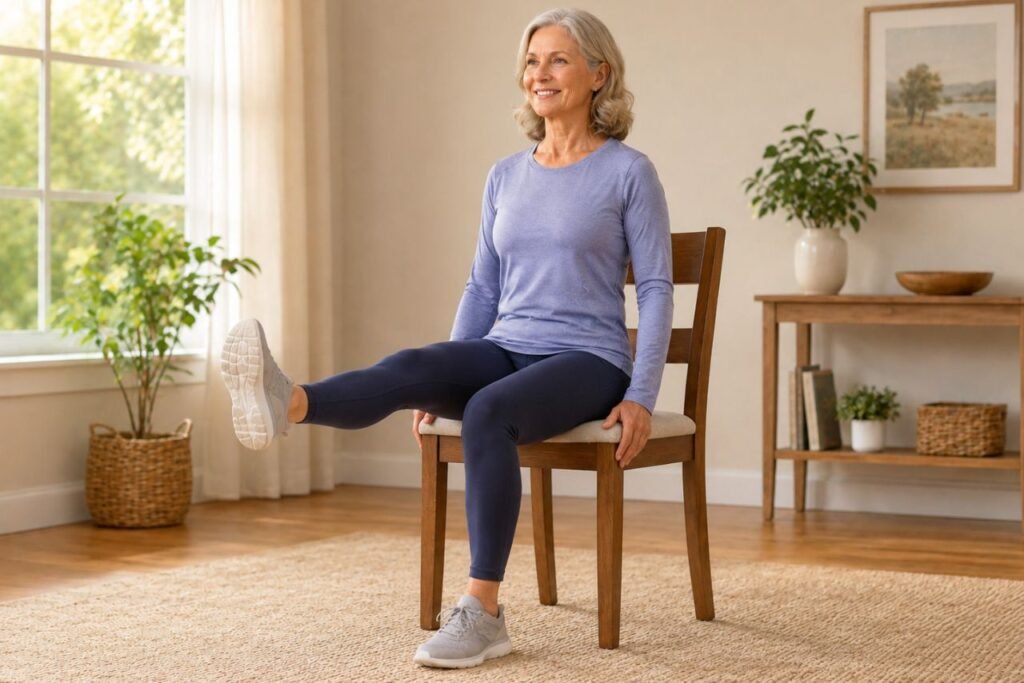
Seated marches wake up your hip muscles and build the leg strength that makes walking, stair-climbing, and rising from a chair easier. Staying seated keeps them gentle on knees and back — a lovely first exercise of the day.
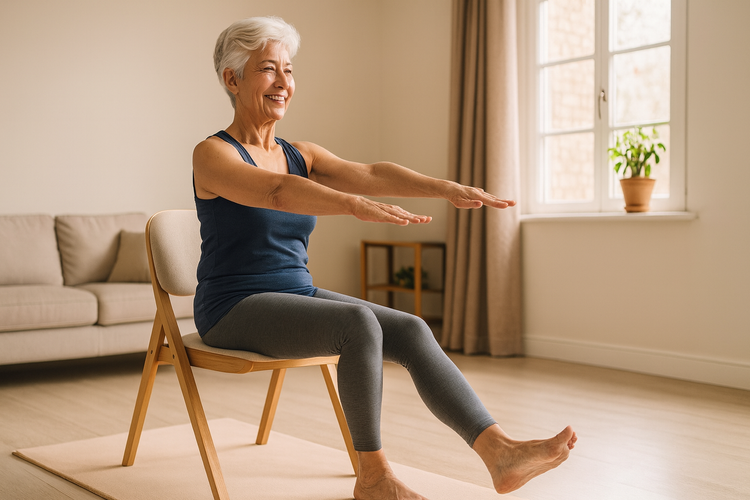
- Sit tall near the front edge of a sturdy chair, feet flat on the floor, hands resting on your thighs or the chair’s arms.
- Lift your right knee a few inches — just enough for your foot to leave the floor. Keep your toes relaxed and your back straight.
- Lower your foot slowly back down, then lift your left knee the same way.
- Alternate sides at a comfortable pace, like a slow march. Try 6 to 8 lifts per leg.
- Rest for a minute. When the whole sequence starts to feel easy, do a second set.
Form cue: think “tall spine, quiet shoulders.” If your shoulders creep toward your ears, lower the lift height. Any sharp or pinching feeling is your signal to stop for the day.
Exercise 2: Heel and Toe Raises Holding a Chair
These strengthen the calves and the muscles along your shins, which are the unsung heroes of steady walking. Stronger lower legs help you push off confidently with each step and recover your footing when the ground is uneven.
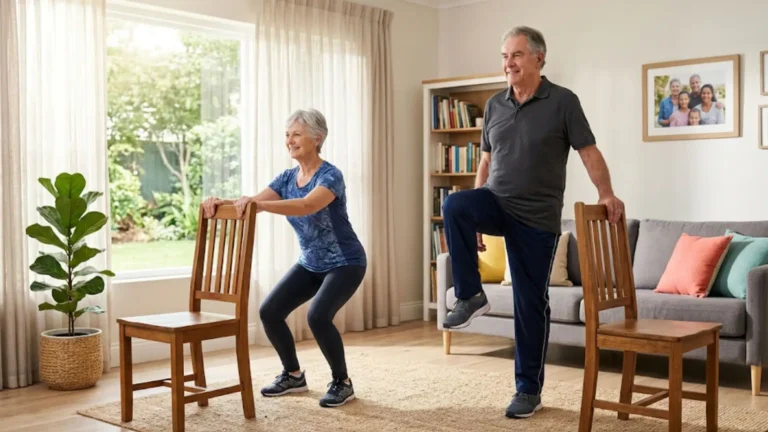
- Stand behind a sturdy chair, resting your hands lightly on the backrest. Hover them there for balance — don’t lean your weight on the chair.
- Rise slowly onto your toes, lifting both heels off the floor. Hold the top position for two or three seconds.
- Lower your heels all the way back down, slowly.
- Now lift your toes, shifting your weight onto your heels. Keep your hands on the chair so you feel secure.
- Do 8 to 10 heel raises, then 8 to 10 toe raises. Rest, then repeat the pair if you like.
Form cue: keep your knees soft, never locked, and move slowly and smoothly. If you feel lightheaded, sit down immediately and rest.
Exercise 3: Wall Push-Ups
Wall push-ups build strength in the chest, shoulders, and arms — the muscles you use to push yourself up from a chair, open a heavy door, or carry a bag of groceries. Doing them standing against a wall is far gentler than the floor version, but it still counts as real strength work.
- Stand an arm’s length from a sturdy wall, feet shoulder-width apart, hands ready at shoulder height.
- Place your palms flat on the wall, fingers pointing up, wrists straight.
- Bend your elbows slowly and lean your chest toward the wall. Keep your body in one straight line from head to heels — no sagging at the waist.
- Pause for a breath, then push yourself back until your arms are straight but your elbows stay soft.
- Start with 5 to 8 slow repetitions. When that feels comfortable, move your feet a small step farther from the wall for a little more challenge.
Form cue: keep your belly gently braced and your shoulders down. If your wrists ache, place your hands slightly lower on the wall.
Exercise 4: Gentle Seated Twists
This one loosens up the middle of your back, where stiffness quietly builds over the years. Better trunk mobility makes everyday things — checking over your shoulder, reaching for a seatbelt, turning to chat at the dinner table — feel natural again.
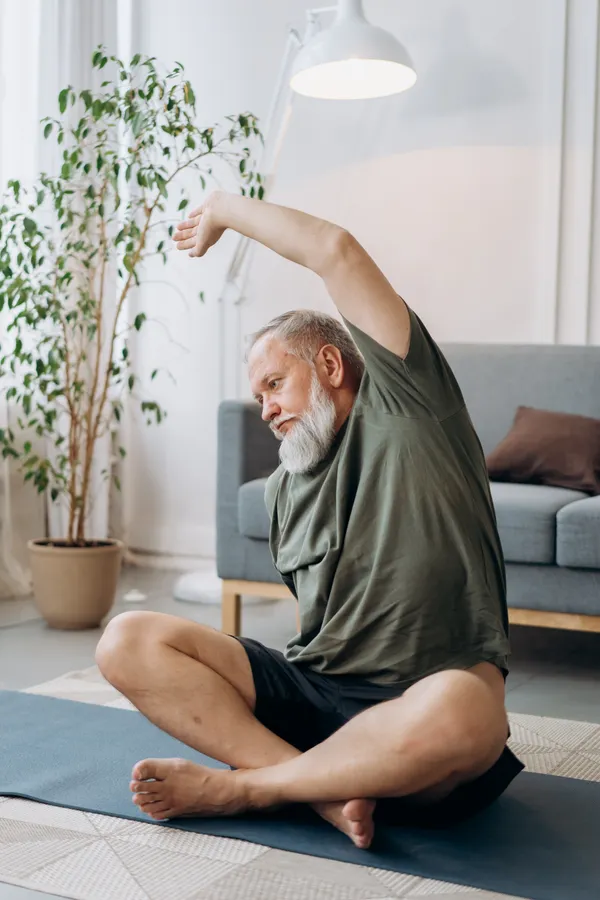
- Sit tall in your sturdy chair, feet flat, hands resting on your thighs.
- Slowly turn your head and shoulders to the right, as if you’re looking over your shoulder. Let your eyes follow the turn.
- Hold for three slow breaths. You should feel a mild, pleasant stretch — never pain.
- Return to facing forward, pause, then twist gently to the left.
- Do 3 to 4 slow twists per side.
Form cue: imagine a string pulling the top of your head upward as you turn. Don’t force the range — keep your hips facing forward.
Exercise 5: Ankle Circles
Stiff ankles make stumbling more likely, because your foot can’t adjust quickly to uneven ground. Ankle circles keep those small joints mobile, and many people find them soothing — this is a fine exercise to do while watching television.
- Sit in your chair and slide one foot slightly forward, heel resting on the floor.
- Slowly draw circles in the air with your toes — five big, smooth circles clockwise.
- Reverse direction and draw five circles counter-clockwise.
- Place that foot down and switch to the other foot.
- Do 2 to 3 full rounds per foot, and stop if a joint feels grindy or sore.
Form cue: keep the movement in the ankle, not the whole leg. Slow beats big — a small, smooth circle does more good than a large, rushed one.
See the Whole Routine at a Glance
Here’s a quick comparison so you can pick a starting point or plan your week.
| Exercise | What it helps | Difficulty | Support needed |
|---|---|---|---|
| Seated marches | Hip strength, walking, stair confidence | Easy | Sturdy chair |
| Heel and toe raises | Balance, ankle and calf strength | Easy to medium | Chair backrest |
| Wall push-ups | Arm, chest, and shoulder strength | Medium | Sturdy wall |
| Gentle seated twists | Back mobility, easier turning | Easy | Sturdy chair |
| Ankle circles | Ankle flexibility, steadier steps | Easy | Sturdy chair |
Frequently Asked Questions
What if I feel pain during an exercise?
There’s a difference between muscles working and something being wrong. A mild, tired feeling in the muscle is normal. Sharp, stabbing, or grinding pain — especially in a joint — is your stop signal. Ease off, rest, and try a smaller range of motion another day. If a particular pain keeps showing up, mention it to your doctor before continuing with that movement.
What should I do if I get dizzy?
Sit down right away and rest until it passes — never push through dizziness. Often the culprit is simply holding your breath, so focus on breathing steadily. If dizziness happens often, or with one specific movement, skip that movement and talk to your doctor.
How often should I do these exercises?
Five to ten minutes, three to five days a week, is a wonderful starting point. Think of rest days as part of the plan, not a failure — your body adapts and gets stronger between sessions. And if you’re feeling tired, unwell, or just off one day, skip it without guilt. The routine will still be there tomorrow.
What if I use a walker or cane?
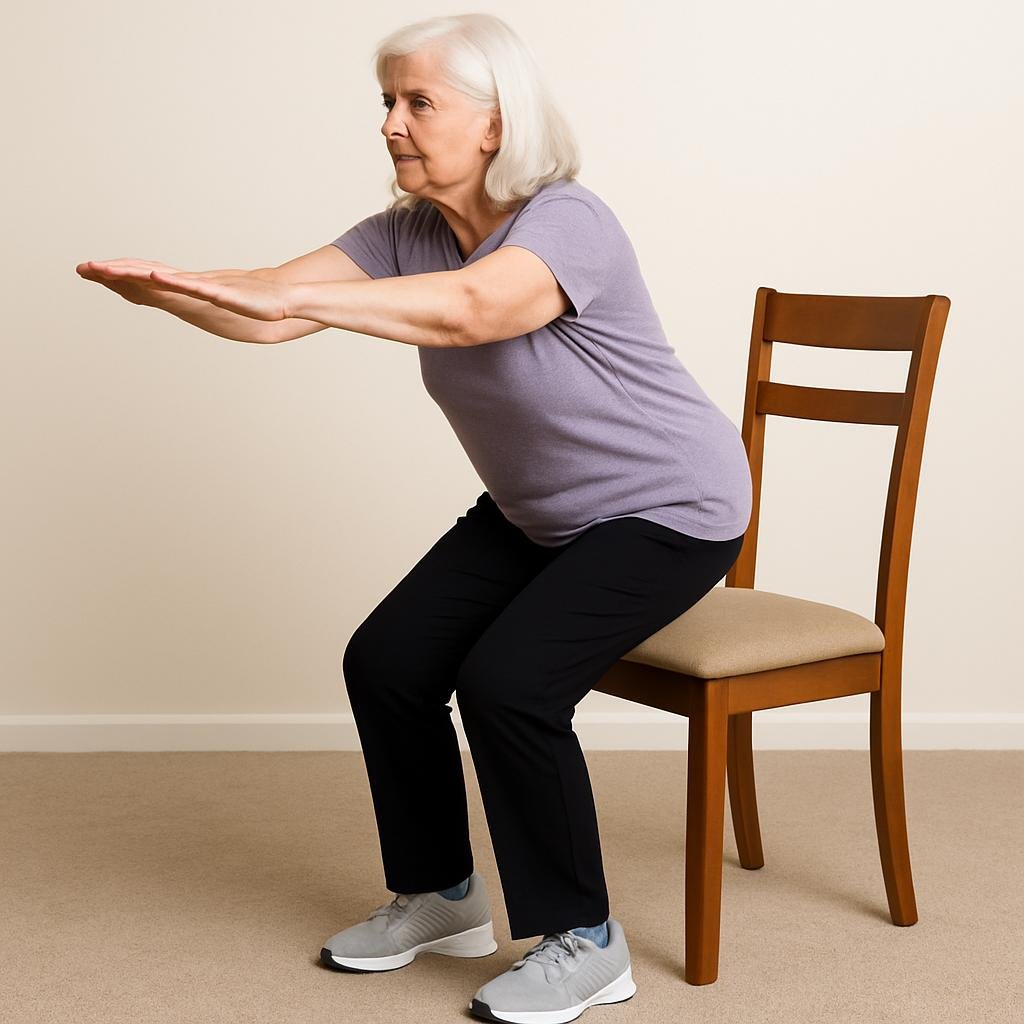
These Easy Exercises for Seniors to Do Safely at Home were designed with support in mind. Do the three seated exercises exactly as written. For the standing ones, push your chair back against the wall so it can’t slide, keep one hand on it, and keep your walker or cane within reach nearby.
I’m worried I’m too out of shape to start. Where do I begin?
Start with whichever exercise looks easiest to you — honestly, ankle circles while watching the evening news counts as a beginning. Do fewer repetitions than suggested if you need to. Progress here isn’t measured by doing more; it’s measured by showing up gently, again and again. Most people are surprised how quickly a few minutes a day starts to feel normal.
Start Where You Are
You don’t need to be fit to begin; you begin in order to feel better, one gentle session at a time. Pick one exercise today — just one — and try it at your own pace with your sturdy chair nearby. Tomorrow, try two. The goal was never perfection; it’s simply staying in motion, safely, in the comfort of your own home.
Your future self — steadier on the stairs, quicker to rise from a chair — is built from these small, quiet efforts. Take a breath, pull up your chair, and begin. You’re doing something genuinely good for yourself, and that deserves a little pride.