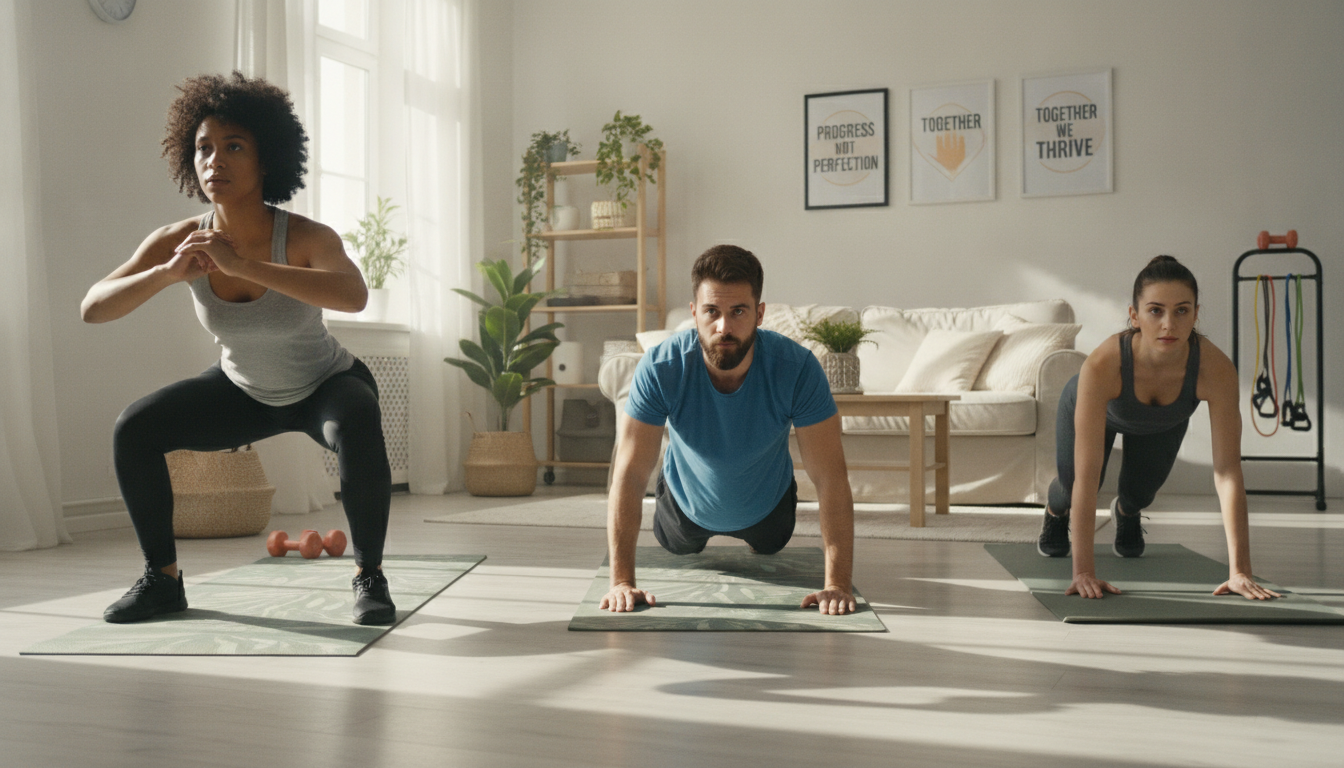
Simple Beginner Workout at Home for People Starting From Zero
Starting a fitness journey often feels overwhelming, but you do not need a gym membership to see real results. Finding a beginner workout at home is the perfect way to build confidence while moving your body in a comfortable space.
Consistency matters more than intensity when you are just getting started. By focusing on easy home exercises for beginners, you can improve your strength and energy levels without needing expensive equipment.
This guide provides a simple exercise routine for beginners that uses only your body weight. We will walk through manageable sessions designed to help you progress safely and effectively. Let’s take that first step toward a healthier version of yourself today.
Key Takeaways
- Fitness is accessible to everyone regardless of their starting point.
- Body-weight movements provide a solid foundation for physical health.
- Consistency is the most important factor for long-term success.
- No specialized equipment is required to begin your training.
- Gradual progress helps prevent injury and keeps motivation high.
Beginner Workout at Home: Start Safely and Set Realistic Goals
Setting yourself up for success requires more than just motivation; it requires a thoughtful approach to safety and planning. When you engage in beginner-friendly at-home workouts, the goal is to build habits that last a lifetime rather than pushing too hard too soon.
Step 1: Check Your Starting Point
Assess your current movement, energy, balance, and any physical limitations
Before you begin, take a moment to observe how your body feels during daily tasks. Notice if you experience stiffness, lack of balance, or low energy levels when moving around your home. Understanding these baselines helps you choose exercises that match your current fitness level.
When to speak with a healthcare professional before exercising
If you have pre-existing health conditions or concerns about your joints, it is wise to consult a doctor. A professional can provide guidance on which movements are safe for your specific needs. This proactive step ensures your quick beginner home workout remains a positive experience.
Step 2: Prepare a Safe Workout Space
Clear a stable area and choose supportive clothing and shoes
You do not need a gym to get a great workout. Simply clear a small, stable area in your living room where you can move freely without bumping into furniture. Wearing supportive shoes and comfortable clothing will help you maintain proper form and prevent unnecessary slips.
Keep water nearby and avoid exercising through sharp pain
Hydration is key to keeping your energy up during any session. Always keep a water bottle within reach to stay refreshed. Most importantly, listen to your body; if you feel sharp or stabbing pain, stop immediately to avoid injury.
Step 3: Choose a Manageable Weekly Schedule
Begin with two or three short sessions per week
Consistency is the secret to success for any basic workout for novices at home. Start by scheduling just two or three short sessions each week to allow your body time to adapt. This approach prevents burnout and keeps your motivation high.
Use rest days to build consistency without overtraining
Rest days are just as important as active days. They allow your muscles to recover and grow stronger. Use the following table to plan your first week effectively.
| Day | Activity Type | Duration |
|---|---|---|
| Monday | Active Movement | 15 Minutes |
| Wednesday | Active Movement | 15 Minutes |
| Friday | Active Movement | 15 Minutes |
| Rest Days | Recovery | Full Rest |
“The secret of getting ahead is getting started.”
Warm Up With Simple Home Exercises for Beginners
A proper warm-up acts as the foundation for a successful and injury-free exercise session. By taking a few minutes to prepare, you follow essential beginner home fitness tips that protect your muscles and improve your overall performance. This phase is not just about physical readiness; it is about mentally transitioning into your movement time.
Step 1: Raise Your Body Temperature
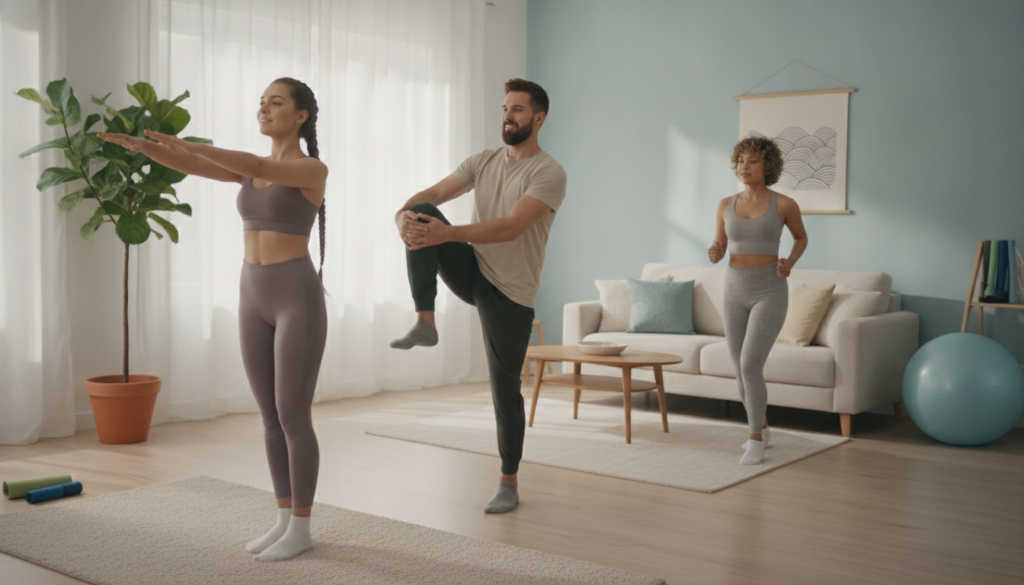
March in place slowly, then increase the pace for one to two minutes
Begin by standing tall and lifting your feet off the floor in a steady rhythm. Focus on your breathing as you find a comfortable pace that makes you feel slightly warmer without causing fatigue.
Use relaxed arm swings to prepare the shoulders and upper body
As you march, let your arms swing naturally by your sides. This simple motion helps loosen the shoulder joints and prepares your body for an effective at-home workout for beginners.
Step 2: Mobilize the Major Joints
Perform gentle shoulder rolls, hip circles, and ankle movements
Slowly roll your shoulders backward in smooth circles to release tension. Follow this by gently rotating your hips and circling your ankles to ensure your joints are lubricated and ready for activity.
Practice controlled torso rotations without forcing your range of motion
Keep your feet planted and gently twist your upper body from side to side. Always listen to your body and stop if you feel any sharp discomfort during these rotations.
Step 3: Rehearse the Main Workout Patterns
Complete a few easy chair squats, wall push-ups, and heel raises
Practicing these movements helps you master the form before you start your main beginner home exercise program. Use a sturdy chair for support during squats and a wall for your push-ups to keep the intensity low.
Adjust the range of motion if your joints feel stiff or uncomfortable
If you feel stiffness, simply reduce the depth of your squat or the angle of your push-up. Consistency is more important than intensity when you are just starting out.
| Warm-up Activity | Duration/Reps | Primary Benefit |
|---|---|---|
| Marching in Place | 2 Minutes | Increases Heart Rate |
| Shoulder Rolls | 10 Repetitions | Improves Mobility |
| Chair Squats | 5 Repetitions | Activates Leg Muscles |
| Wall Push-ups | 5 Repetitions | Prepares Chest/Arms |
A Simple Exercise Routine for Beginners Using Body Weight
Building strength starts with simple, controlled movements that you can perform in your own living room. You do not need expensive equipment to see results, as these easy home workouts rely entirely on your own body weight. By focusing on proper form, you create a solid foundation for your fitness journey.
Step 1: Practice the Lower-Body Exercises
Chair squats for leg strength and safer balance support
Squats are essential for functional movement. Using a chair provides a safety net, ensuring you maintain proper depth without losing your balance.
Glute bridges for the hips and back of the legs
Lie on your back with knees bent and feet flat. Lift your hips toward the ceiling to engage your glutes and lower back muscles effectively.
Standing heel raises for the calves and ankle control
Stand tall and rise onto your toes, then slowly lower back down. This simple move improves ankle stability, which is vital for a home workout for beginners.
Step 2: Practice the Upper-Body Exercises
Wall push-ups for the chest, shoulders, and arms
Place your hands on a wall at shoulder height. Lean in and push back to build upper-body strength without the intensity of floor push-ups.
Standing wall angels for posture and shoulder mobility
Stand with your back against a wall and move your arms in a slow, controlled arc. This exercise helps correct posture and opens up tight shoulder muscles.
Step 3: Add Beginner-Friendly Core Exercises
Dead bugs or bent-knee marches for controlled abdominal movement
These movements teach you to keep your spine neutral while moving your limbs. They are excellent beginner exercises at home for building deep core strength.
Bird dogs for core stability, balance, and coordination
From a hands-and-knees position, extend the opposite arm and leg. This movement challenges your balance and improves overall coordination.
Step 4: Use Easier Variations First
Shorten the movement range before adding repetitions
If a movement feels too difficult, simply reduce the range of motion. You can gradually increase the distance as your strength improves over time.
Use a wall, countertop, or sturdy chair for balance support
Never hesitate to use household furniture for extra stability. These easy home workouts are designed to be safe and accessible for everyone.
“Consistency is the bridge between goals and accomplishment.”
| Exercise | Primary Focus | Support Tool |
|---|---|---|
| Chair Squats | Leg Strength | Sturdy Chair |
| Wall Push-ups | Upper Body | Wall |
| Bird Dogs | Core Stability | Floor Mat |
| Heel Raises | Ankle Control | Countertop |
By following this home workout for beginners, you can build confidence and physical capability at your own pace. Remember to listen to your body and prioritize quality over quantity during every session.
Complete the At-Home Workout for Beginners Step by Step
Transforming individual exercises into a cohesive routine is the secret to a successful session. By organizing your movements into a simple beginner home workout, you create a predictable rhythm that helps your body adapt safely.
Step 1: Perform the First Circuit
This initial phase focuses on building foundational strength through controlled, steady movements.
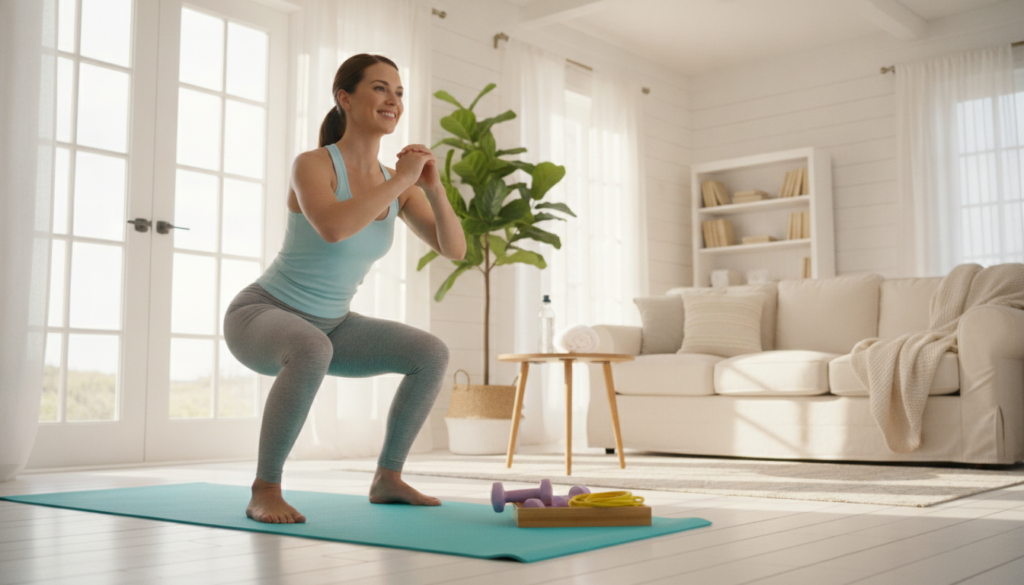
Complete 8 to 10 chair squats
Complete 6 to 10 wall push-ups
Complete 10 glute bridges
Rest for 30 to 60 seconds while breathing normally
Step 2: Perform the Second Circuit
Once you finish the first set, move directly into these movements to improve your balance and cardiovascular health as part of your beginner-friendly home fitness plan.
Complete 8 to 10 standing heel raises
Complete 6 to 8 bird dogs per side
March in place for 30 to 45 seconds
Rest before repeating the circuit if your form remains controlled
Step 3: Match the Workout to Your Fitness Level
It is important to listen to your body when starting workout routine at home. Adjusting the volume ensures you stay challenged without overexerting yourself.
- Start with one circuit when you are completely new to exercise.
- Progress to two circuits after the routine feels manageable.
- Keep movements slow and stop before technique breaks down.
Step 4: Finish With a Cooldown
A proper cooldown is essential for beginner-friendly home fitness, as it helps your heart rate return to normal and prevents stiffness.
Walk gently in place until your breathing settles
Stretch the calves, thighs, chest, shoulders, and hips without bouncing
Notice soreness, pain, dizziness, or unusual fatigue after the session
By following this simple beginner home workout, you build a sustainable habit. Remember that starting workout routine at home is a marathon, not a sprint, so prioritize your comfort and safety above all else.
Build a Beginner Home Workout Plan That You Can Maintain
Designing a manageable plan is the best way to ensure you stick with your new exercise routine. When you start a basic at-home workout for beginners, the goal is to create a habit that fits naturally into your daily life. By focusing on small, sustainable steps, you avoid burnout and keep your motivation high.
Step 1: Follow a Simple Weekly Template
A structured home-based workout for novices works best when you allow your body time to recover. Consistency is built by planning your sessions in advance.
Schedule strength-focused home workouts on nonconsecutive days
Aim to perform your strength training on alternating days, such as Monday, Wednesday, and Friday. This schedule gives your muscles the necessary time to repair and grow stronger between sessions.
Add easy walks or gentle mobility sessions between workouts
On your off days, stay active with light movement. A simple walk or gentle stretching helps improve blood flow and keeps your joints feeling loose.
| Day | Activity Type | Intensity |
|---|---|---|
| Monday | Strength Training | Moderate |
| Tuesday | Active Recovery (Walk) | Low |
| Wednesday | Strength Training | Moderate |
| Thursday | Mobility/Stretching | Low |
| Friday | Strength Training | Moderate |
Step 2: Progress One Variable at a Time
When you perform easy exercises for beginners at home, you should avoid changing too many things at once. Small, incremental changes lead to the best long-term results.
Add a few repetitions before adding another circuit
If an exercise feels comfortable, try adding one or two extra repetitions to your set. Only add a full circuit once you feel confident with your current volume.
Increase work time gradually while keeping rest periods available
Slowly extend the time you spend moving during each interval. Always ensure you have enough rest to maintain good form throughout the entire session.
Choose more challenging variations only after basic movements feel stable
Do not rush into complex movements. Wait until you can perform the standard version of an exercise with perfect control and balance.
Step 3: Track Consistency Instead of Perfection
Tracking your progress provides valuable insights into your fitness journey. It helps you see how far you have come over time.
Record workout dates, exercises, repetitions, and energy levels
Keep a simple logbook or digital note to track your sessions. Noting your energy levels helps you understand how your body responds to different types of activity.
Use missed sessions as information rather than a reason to quit
If you miss a day, do not feel discouraged. Simply look at why it happened and adjust your plan to make it easier to stay on track next time.
Beginner Home Fitness Tips for Better Results and Fewer Setbacks
Achieving your health goals at home is about working smarter, not just harder. By focusing on quality movement, you can ensure that your beginner-friendly home workouts remain both effective and enjoyable over the long term.
Step 1: Prioritize Form and Breathing
Move through a comfortable range and keep your breathing steady
Always focus on moving through a range of motion that feels natural for your body. Never force a movement if it feels restricted or awkward. Keeping your breathing steady helps you maintain control and prevents unnecessary tension.
Exhale during the harder part of each repetition
A simple trick to improve your performance is to exhale during the most challenging phase of an exercise. For example, breathe out as you push up from a floor press or stand up from a squat. This technique provides extra stability for your core.
Step 2: Distinguish Normal Effort From Warning Signs
Expect mild muscle fatigue but stop for sharp pain or joint discomfort
It is completely normal to feel a dull ache or mild fatigue in your muscles after an at-home workout routine for beginners. However, you should immediately stop if you experience sharp, shooting pain or localized discomfort in your joints. Listen to these signals to avoid potential injury.
Stop and seek medical guidance for chest pain, faintness, or severe shortness of breath
Your safety is the top priority during any physical activity. If you feel dizzy, faint, or experience pain in your chest, stop exercising right away. Please consult a healthcare professional if you encounter these symptoms or have trouble catching your breath.
Step 3: Support Recovery
Sleep well, drink water, and eat regular balanced meals
Recovery is just as important as the exercise itself. Aim for quality sleep, stay hydrated throughout the day, and fuel your body with balanced meals. These simple home exercises for beginners work best when your body has the energy it needs to repair and grow stronger.
Allow tired muscles to recover before repeating intense movements
Muscles need time to adapt to new challenges. If you feel significant soreness, give yourself an extra day of rest before repeating intense movements. Consistency is built on recovery, so do not feel guilty about taking a break when your body asks for one.
Conclusion
Building a sustainable habit starts with small, intentional movements in your own living room. You now possess the tools to create a personalized beginner home workout plan that fits your lifestyle and energy levels.
Focus on consistent effort rather than intense bursts of activity. A quick home workout for beginners can yield significant results when you prioritize proper form and allow your body time to recover between sessions.
Listen to your body as you progress through each circuit. If you need visual guidance, many reputable platforms offer beginner workout videos for home use to help you refine your technique. These resources provide extra support as you gain strength and confidence.
Your path to better health is a marathon, not a sprint. Keep your goals realistic and celebrate the small wins you achieve every single week. You have everything you need to begin this transformation right now.